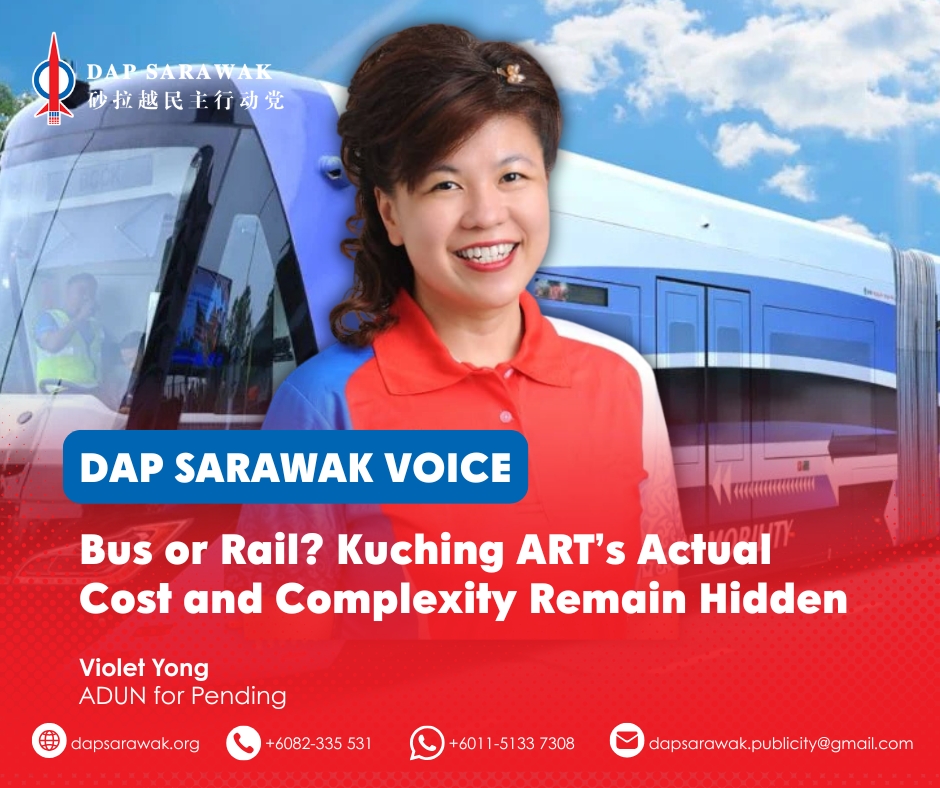
Kuching: The Autonomous Rail Transit (ART) project currently being implemented in Kuching by Sarawak Metro Sdn Bhd is, in fact, a bus-based public transport system that moves on wheels.
Yet, in reality, its design and execution resemble a rail system rather than a bus-based system.
The ART system we are to have is built with dedicated corridors, elevated structures, and segregated alignments, all of which are hallmarks of LRT or MRT infrastructure design and operation.
Even in many countries, tram systems do not run exclusively on such rigid, purpose-built infrastructure.
If one examines the Bus Rapid Transit (BRT) systems implemented in cities around the world, including many cities in China, it is clear that true BRT systems emphasise flexibility, cost-efficiency, and at-grade operation.
They are designed to integrate with existing road networks and link to urban footpaths for walking and biking, and not to impose massive elevated structures that permanently alter the urban landscape, and drive up huge costs.
In contrast, the ART project in Kuching mirrors so-called “ART” projects seen in certain cities in China, which have increasingly been criticised as rail systems in disguise that attempt to deliver the image of modern rail transit without openly admitting their actual cost, complexity, and long-term financial burden.
If the intention was to build a rail-like system, then the government should have been honest with the public from the beginning.
Instead, Sarawakians are being told this ART system is cheaper. At the same time, taxpayers are asked to foot the bill for infrastructure that is neither cheap, nor flexible, nor easily adaptable in the future.
The people have a right to ask why Sarawak is paying rail-level costs for a system that is labelled as a bus?
Public transport projects must prioritise value for money, transparency, and genuine public benefit, not branding exercises or politically convenient labels. The ART project, as currently built, fails this test.
This is yet another example of how the Sarawak GPS government spends billions of ringgit of taxpayers’ money on unnecessary and over-designed projects. At the same time, many basic needs, such as water supply, road maintenance, and public services, remain unresolved.
Violet Yong
ADUN for Pending
15 January 2026