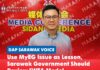

Kuching: Remarks by Kuching South Mayor Dato Wee Hong Seng regarding Sungai Apong are both revealing and troubling, said Special Assistant to Stampin MP Chong Chieng Jen, Michael Kong Feng Nian.
Kong said by openly admitting that Sungai Apong has been sidelined from development for nearly two decades due to “political structures,” Wee has confirmed DAP Sarawak’s assertions that SUPP has politicised development and punished communities represented by the opposition.
“This is a serious matter. Development should never be held hostage to political alignment. Roads, drainage, and basic infrastructure are public necessities, not political rewards.
“Yet what Wee Hong Seng admitted is precisely a system where opposition-held areas are deliberately disadvantaged, while resources are channelled elsewhere,” he said in a statement.
Kong said that what makes this even more indefensible is that such practices are not the norm in a mature democracy.
“At the federal level, we have seen clear examples where opposition-led states such as Kedah, Kelantan, and Terengganu continue to receive billions of ringgit in federal funding.
“Major infrastructure projects have been approved and implemented despite political differences. If the Federal Government can rise above partisan politics, why can’t SUPP do the same in Sarawak?” he asked.
He pointed out that SUPP must remember that public funds belong to the people, not to any political party.
“Opposition-held areas deserve the same attention, respect, and investment as government-held seats. Anything less is deliberate marginalisation and discrimination,” Kong said.
Kong, who is also DAP Sarawak Assistant Publicity Secretary, said that DAP Sarawak will continue to speak up against such injustice and demand fair, needs-based development for all Sarawakians, regardless of political affiliation.
“Development must unite our communities, not be weaponised to divide them,” he said.