
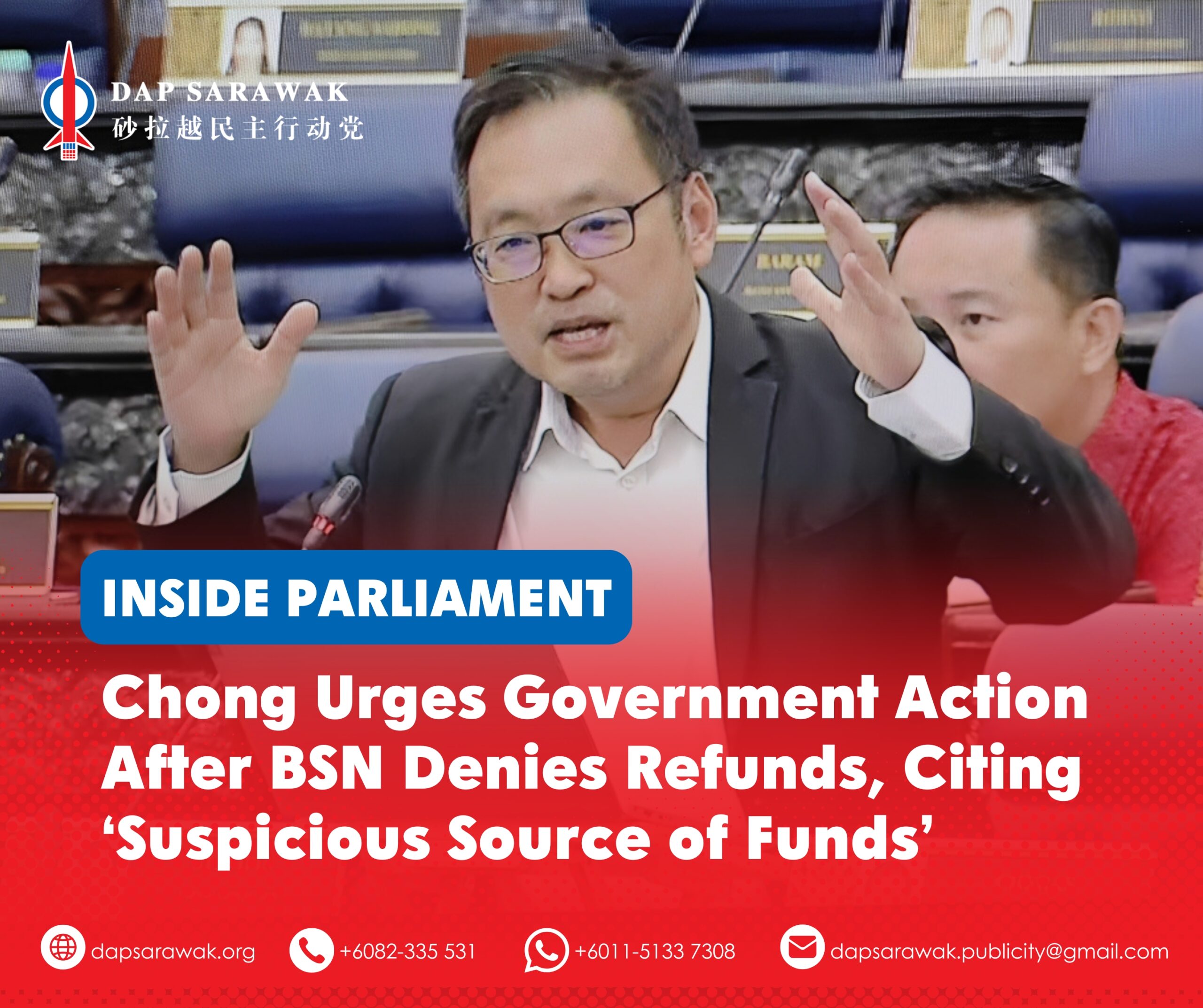
Kuala Lumpur: Stampin MP Chong Chieng Jen has questioned Bank Simpanan Nasional’s (BSN) refusal to refund some victims of an internal investment scam, citing the bank’s claim that part of the victims’ investment funds came from cash savings kept at home rather than withdrawn directly from bank accounts.
According to Chong, a BSN classified such cash savings as a “suspicious source of funds”, a justification he described as unreasonable and irresponsible.
“It is as if keeping cash at home is a crime,” he said during the debate on the motion of thanks for the Royal Address in the Dewan Rakyat, yesterday.
Chong stressed that BSN’s use of the source-of-funds issue to deny refunds to victims was unjustified, especially since the victims were deceived by BSN’s own officers while conducting official transactions at the bank’s premises.
He said that if there were any doubts regarding the legitimacy of the funds, the matter should be investigated separately by the authorities, such as the Royal Malaysia Police (PDRM), rather than being used by the bank as a pretext to avoid compensating its customers.
“If the funds are indeed illegal, let the police investigate. BSN should not use this as an excuse to deny victims their rightful refunds,” he said.
Chong also reminded that BSN, as a financial institution and particularly as a government-owned bank, has a duty to protect customers’ interests and ensure justice for victims of fraud.
He therefore urged the federal government to intervene and instruct BSN to immediately provide full refunds to all victims affected by the scam involving its officers.
Commenting on the issue of refunds, Chong said that although the fraud case was exposed towards the end of last year, only some of the victims have received refunds, while many others have yet to receive any compensation from the bank.
More than 70 BSN customers were reported to have fallen victim to the investment scam involving several BSN officers at one of the bank’s branch offices in Kuching, with total losses estimated to have reached RM11 million.
The scandal is believed to have involved a BSN officer entrusted with promoting the bank’s investment products.
The officer allegedly collected money from customers under the pretext of making official BSN investments, but the funds were not invested as promised.