
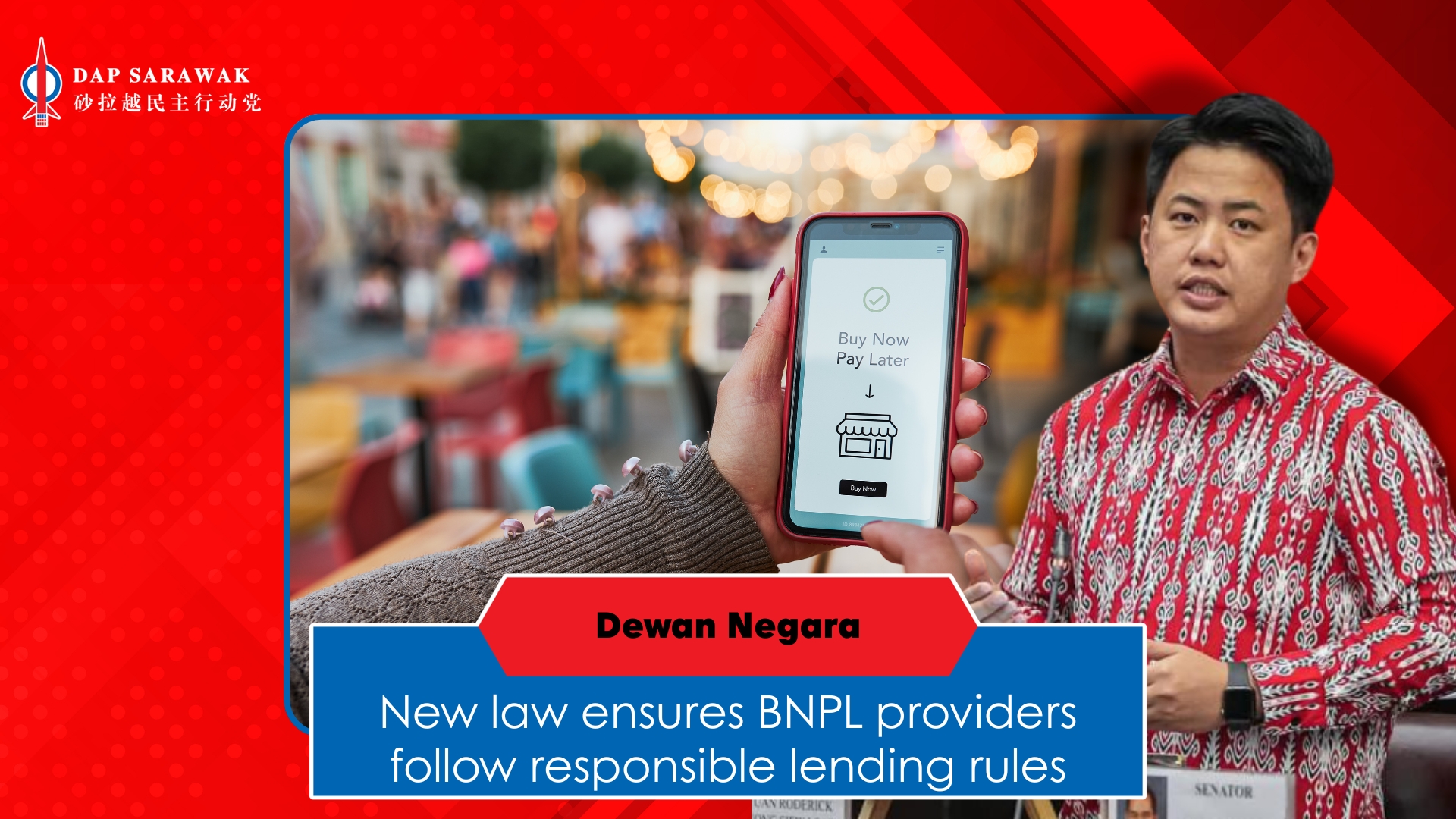
Kuala Lumpur: The government is finalising the Consumer Credit Bill (RUUKP) to ensure that “Buy Now, Pay Later” (BNPL) services are more strictly regulated, particularly to protect young consumers and vulnerable groups.
The Ministry of Finance (MOF) said the RUUKP will cover all non-bank credit providers, including BNPL schemes, through a comprehensive and integrated regulatory framework.
“When the Consumer Credit Act 2025 (AKP) is gazetted and enforced, the Consumer Credit Commission (SKP), which will be established under the MOF, will serve as the enforcement body to regulate this industry.
“All BNPL providers will be required to obtain an SKP license so their activities can be directly monitored,” the ministry said in a written reply to a question from Senator Roderick Wong Siew Lead.
Roderick had asked the MOF to clarify the role of Bank Negara Malaysia and the Securities Commission in ensuring that BNPL providers comply with consumer protection principles and do not impose hidden charges or burdensome penalties.
He also asked whether the government intends to require BNPL providers to conduct financial capability assessments before approving transactions, particularly for young people.
At the same time, the MOF explained that BNPL license applications will be assessed based on “fit and proper” requirements, governance capabilities, and commitment to compliance with the AKP.
Under the AKP, companies offering BNPL schemes will be required to comply with responsible lending practices and conduct requirements to protect credit users.
“This includes conducting affordability assessments on credit users before offering financing; ensuring fair transaction terms; charging transparent, reasonable, and non-burdensome fees; as well as practicing prudent and professional debt collection procedures,” the ministry said.
The MOF added that affordability assessments are an essential requirement for BNPL companies before offering credit.
“This is necessary to ensure that borrowers, including the younger generation, can repay the borrowed funds without experiencing serious financial stress,” it said.
In addition to legal enforcement, the government also emphasised the importance of financial literacy to ensure that the public can manage their finances wisely and understand the risks of excessive BNPL usage.