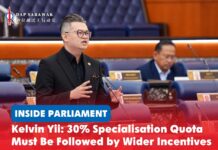

Kuala Lumpur: Bandar Kuching MP Dr Kelvin Yii Lee Wuen has proposed that the government establish a dedicated online verification portal under the National Registration Department (JPN) to manage the registration of social media accounts in Malaysia.
Speaking during the 2026 Budget debate in the Dewan Rakyat, Dr Yii said the initiative would allow users to verify their identities through the JPN portal using a unique code, voucher, or QR code before creating any social media account.
He explained that this approach would ensure only individuals meeting the legal age requirement could open accounts, while preventing the transfer of sensitive personal data to third-party platforms.
“This method keeps citizens’ data securely under government custody while enabling verification without exposing personal details to external parties,” he said.
Dr Yii said the proposed system would solve several key challenges, ensuring data consistency, reducing the risk of data leaks across multiple platforms, and optimising existing government digital infrastructure cost-effectively.
He described the proposal as a “middle-ground solution” that balances data privacy with user protection, while also highlighting the need to address online scams and fraudulent advertising.
Citing Singapore’s Online Criminal Harms Act (OCHA) as an example, Dr Yii urged Malaysia to consider a similar model requiring mandatory identity verification for all social media advertisements.
“If an advertiser fails to verify their identity using valid local identification or company registration, platforms should not allow them to target Malaysian users,” he said, adding that such proactive measures could significantly reduce online scams.
Dr Yii also stressed that digital literacy education must accompany regulatory efforts, urging the government to launch a national campaign to teach responsible online behaviour, critical thinking, and cybersecurity awareness.
He called for stronger cooperation between the government, schools, and NGOs to empower parents to guide their children in navigating the digital world safely.
“Open communication between parents and children is the first line of defence. Protecting them requires awareness, not just restrictions,” he said.
Dr Yii further emphasised that any regulation must uphold fundamental rights, including privacy and freedom of expression, and include safeguards to prevent abuse of power by future administrations.
“We must act wisely, not hastily. Let this tragedy be a turning point to build a safer and more responsible digital community,” he concluded.